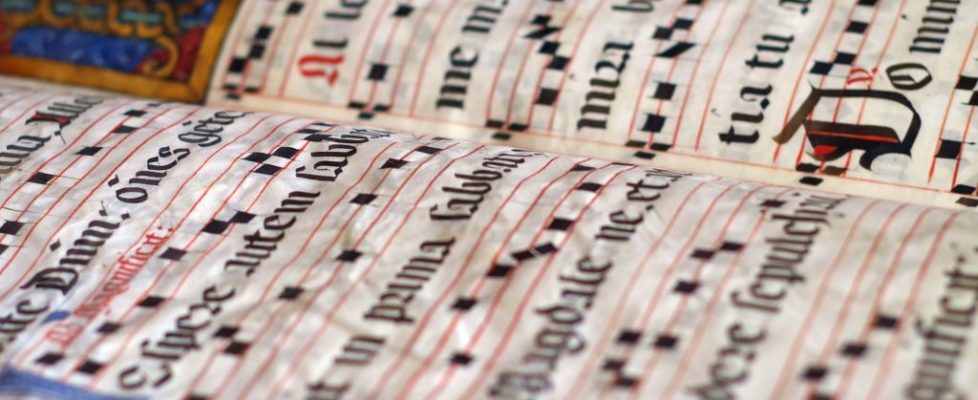
Following the reforms of the Second Vatican Council (1962–1965), Catholic liturgical music underwent significant changes. In many places, the Church moved away from an almost exclusive reliance on Gregorian chant and traditional sacred music to embrace a wider variety of musical styles. As often happens when new possibilities emerge, some communities moved toward an opposite extreme of relying primarily on contemporary and popular musical idioms, leaving behind the Church’s ancient musical traditions.
Over the decades, however, a healthier balance has begun to emerge. Today, many parishes are discovering that a rich and meaningful liturgy can draw from the full treasury of sacred music. In a single Mass, one might hear Gregorian chant, a traditional hymn from the Lutheran tradition, Renaissance polyphony, English chant, and contemporary sacred music. Such variety can enrich the worship experience and may be closer to the vision of the Second Vatican Council than either extreme.
The Council did not intend to discard the Church’s vast musical heritage. On the contrary, it reaffirmed the value of Gregorian chant and sacred music while encouraging the active participation of the faithful. As music ministers, we have an extraordinary wealth of resources from which to choose. Our responsibility is to remain open to the many forms through which people encounter God in prayer. What inspires one person spiritually may not resonate in the same way for another.
For this reason, I encourage Church musicians to study the treasures of the past while remaining open to worthy contemporary expressions. Excellent resources for liturgical planning include the Vatican II document Musicam Sacram, the National Association of Pastoral Musicians (NPM), and GIA Publications.
When planning for the liturgy, it is important to remember that participation takes different forms. We want the congregation to participate actively in singing hymns, psalms, acclamations, and responses. At the same time, we must recognize the value of contemplative listening. Listening attentively to a choir anthem, a solo, or an organ meditation is also a form of participation in the liturgy.
Every parish choir should ideally know at least two settings of the Mass Ordinary. These settings include the Kyrie, Gloria, Sanctus, and Agnus Dei. One setting might be more accessible and familiar to the congregation, while another may be more traditional in style. Since these texts recur throughout the liturgical year, familiarity allows the assembly to participate more confidently and prayerfully.
For the Offertory, a brief anthem, motet, or solo can be an excellent choice, particularly when a choir or schola is available. The text may reflect the Gospel, the readings of the day, or the liturgical season. Advent and Lent in particular have rich repertoire bases to provide countless possibilities to reflect the Mysteries being celebrated. At certain times of the year, Marian music may also be appropriate. For example, during the traditional Marian months of May and October, settings of the Ave Maria can be particularly effective. Beautiful settings of this prayer can be found by composers Jacob Arcadelt, William Byrd, Tomás Luis de Victoria, and Heinrich Ignaz Franz Biber, along with the traditional Gregorian chant of the text.
For Communion, the music should generally reflect the Mystery of Christ’s Body and Blood and the act of receiving the Eucharist. Traditional works such as Ave Verum Corpus or Panis Angelicus, along with Eucharistic hymns, Gregorian chant, or the Communion antiphon of the day with psalm verses and organ improvisation can all serve this moment beautifully.
These reflections are intended as a starting point for music directors and liturgical musicians. The goal is not simply to choose music, but to help create an atmosphere of prayer in which the congregation can sing, listen, reflect, and encounter God through the rich musical heritage of the Church.